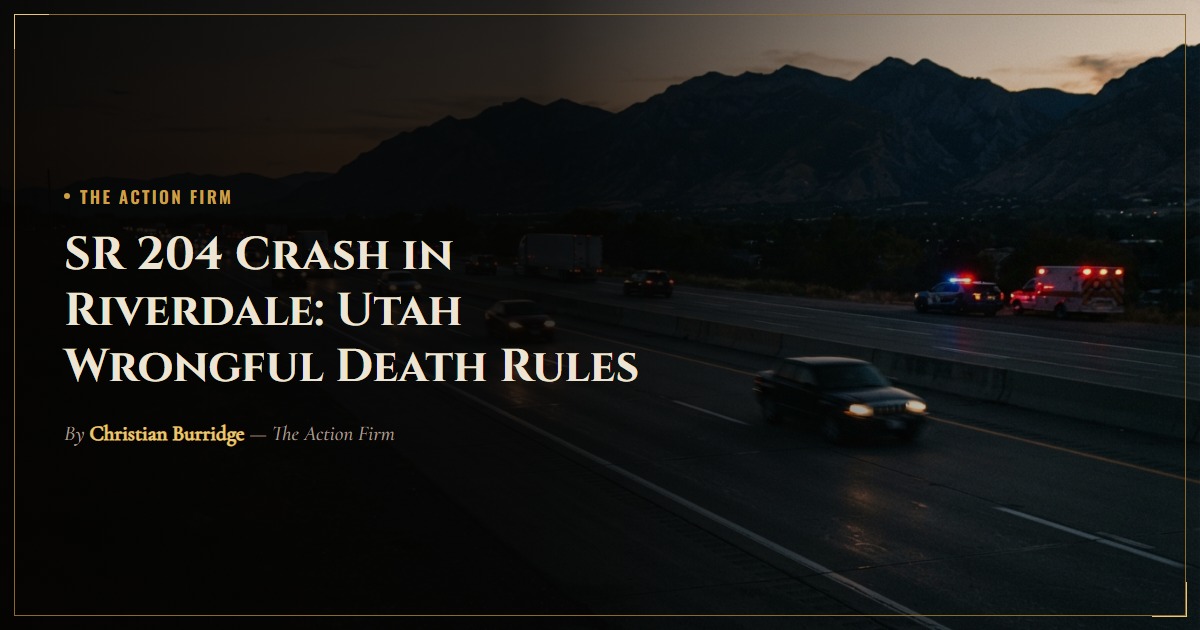
What Did UDOT Report About the September 20, 2026 SR 204 Collision?
The Utah Department of Transportation recorded a crash on SR 204 in Weber County during the evening hours of Sunday, September 20, 2026. The collision happened on southbound Wall Avenue at the intersection of 40th Street and Riverdale Road in Riverdale.
UDOT classified the incident's severity as minor, with no full roadway closure ordered. Responders blocked two of the three southbound left lanes on SR 204, while one of the two northbound left lanes was also shut down to clear the scene.
The preliminary state log did not identify the cause of the wreck, the travel directions of the individual vehicles, or any specific injuries. When reviewing early traffic data, you have to treat initial state logs as developing records rather than final findings of liability.
How Does Utah's Wrongful Death Deadline Differ From General Injury Claims?
Utah law enforces a distinct two-year statute of limitations for wrongful death claims under Utah Code 78B-2-304(2). That clock starts running on the date of death, giving surviving relatives half the time provided for ordinary crash lawsuits.
By contrast, standard non-fatal traffic claims carry a four-year filing deadline under Utah Code 78B-2-307. Many grieving families assume the longer four-year window applies across the board, only to find the courthouse doors shut if they wait too long.
When a traffic loss strikes, surviving relatives are focused on immediate emotional and practical burdens rather than litigation calendars. Reviewing Utah wrongful death rules early prevents families from accidentally forfeiting their right to hold an at-fault driver accountable.
Who Has Standing to File a Wrongful Death Claim Under Utah Law?
Under Utah statute, a wrongful death lawsuit cannot be filed by just anyone who loved the deceased person. The claim must generally be brought by the deceased individual's legal heirs or by an appointed personal representative on behalf of the surviving family.
Recognized damages under Utah law cover tangible economic hardships as well as personal losses. These categories include the loss of financial support, burial and funeral expenses, and the loss of the deceased person's care, comfort, and companionship.
Determining legal standing and gathering the necessary financial and medical documentation is demanding work. Working through these procedural requirements is rarely something a family should have to manage on their own while coping with grief.
How Does Comparative Fault Impact Utah Wrongful Death Recoveries?
Utah's modified comparative negligence statute, found in Utah Code 78B-5-818, applies directly to fatal crash claims. That means an insurance company can attempt to assign a percentage of fault to the deceased driver in order to reduce the financial settlement.
If the deceased person is found to be partially responsible, any eventual recovery is reduced by that exact proportion. If the assigned share of fault reaches fifty percent or higher, Utah law bars the surviving family from collecting any compensation at all.
Because liability disputes directly threaten surviving dependents, preserving physical evidence and interviewing witnesses immediately after any serious collision is critical. You can speak with The Action Firm to review the facts of a fatal incident and verify what legal options remain open.