
What Happened on Northbound I-15 Near 4500 South in Murray?

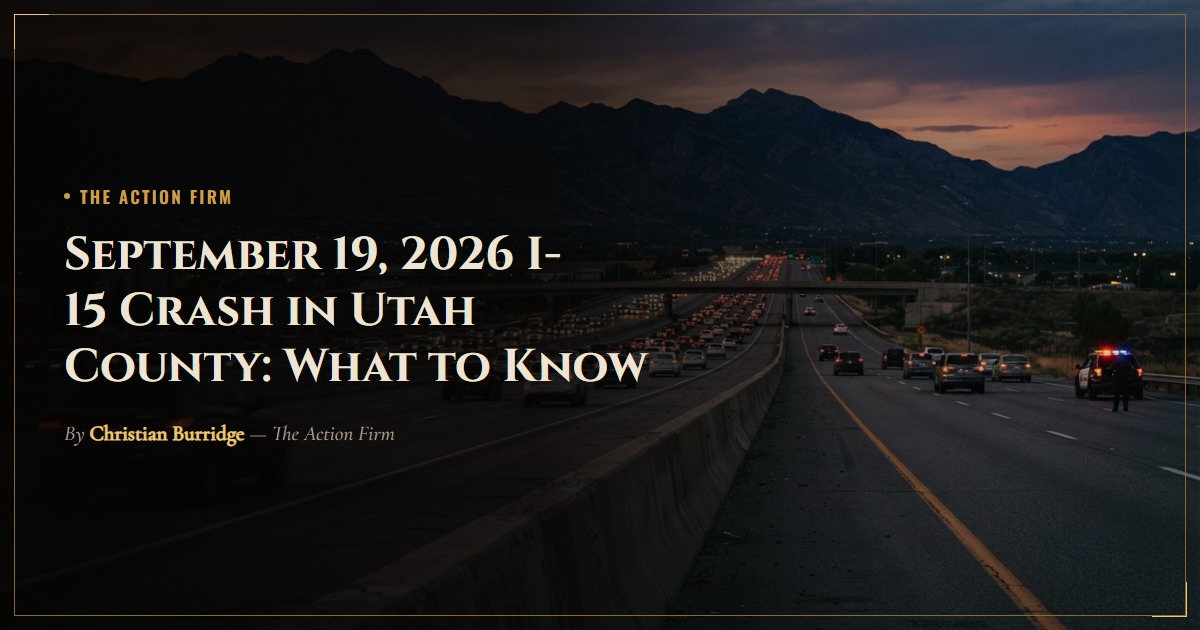
According to preliminary traffic data from the Utah Department of Transportation, a minor incident occurred on northbound I-15 north of 4500 South in Murray on Sunday, September 20, 2026. The report logged a disabled vehicle blocking the center lane of six travel lanes on Sunday evening. The roadway did not undergo a full closure.
When a disabled vehicle obstructs an active highway lane, sudden traffic slowdowns and secondary collisions frequently follow. UDOT's preliminary report does not assign fault or detail specific driver actions leading up to the blockage. For anyone caught in traffic or involved in an incident at that scene, documenting physical details and securing the official crash report remain vital initial steps.
How Does Utah Comparative Fault Affect Crash Claims?
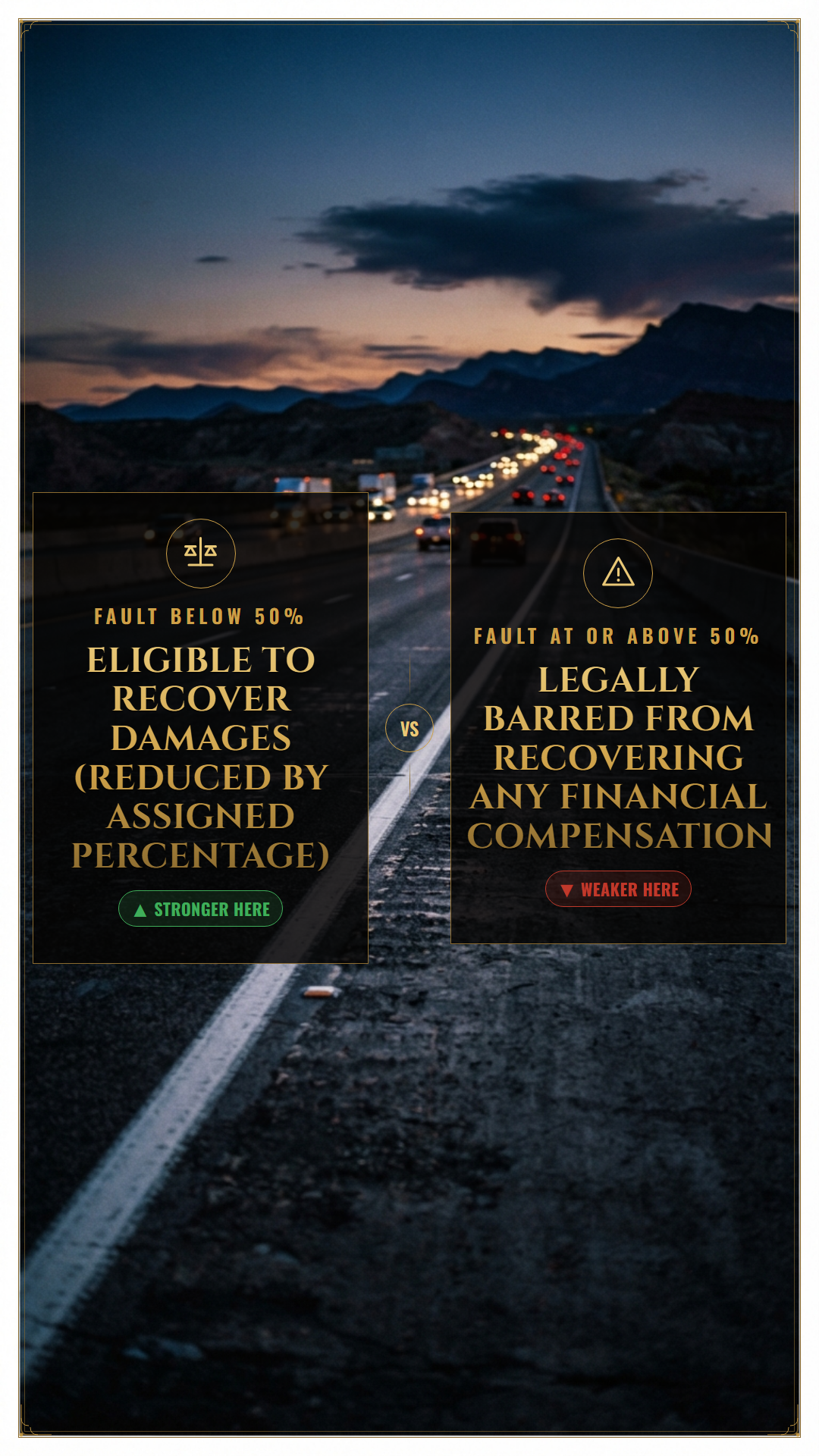
Utah operates under a modified comparative negligence system established by Utah Code 78B-5-818. Under this legal framework, an injured claimant can recover damages only if their assigned share of fault remains below 50 percent. If an insurance carrier or a court determines your fault reaches or exceeds that 50 percent mark, you are legally barred from recovering any financial compensation.
Any percentage of fault attributed to you directly reduces your final compensation check. Because every assigned point lowers what an insurance company must pay, adjusters focus heavily on shifting blame toward the injured driver. This financial dynamic makes giving a recorded statement without legal guidance risky, as casual remarks can be leveraged to assign unnecessary fault.
Understanding how fault rules operate is essential when evaluating a car accident claim. Insurance companies evaluate fault aggressively from day one to minimize their own payout.
What Deadlines Apply to Utah Personal Injury Claims?
Under Utah Code 78B-2-307, the general statute of limitations allows four years from the date of an incident to file a personal injury lawsuit. This four-year window applies broadly to standard motor vehicle collisions across the state. However, accident victims should never assume they automatically have the full four years to act.
Certain circumstances dramatically reduce the time available to initiate legal proceedings. For instance, claims involving government entities carry significantly shorter procedural deadlines and distinct notice requirements. Missing a mandatory filing deadline completely bars an injured person from pursuing recovery, regardless of the strength of their underlying evidence.
Why Do Insurance Adjusters Push for Fast Settlements?
Insurance adjusters are professional negotiators whose primary duty is safeguarding their employer's bottom line rather than looking out for injured drivers. A common insurer tactic involves presenting an early settlement offer before the full medical scope of an injury becomes clear. Traumatic injuries like concussions or whiplash often take days or weeks to manifest symptoms and reveal long-term costs.
Signing a settlement agreement too quickly permanently closes out a claim, leaving the injured party personally responsible for unexpected future medical bills. Accurately assessing an injury claim requires projecting future treatment needs, calculating lost earning capacity, and accounting for pain and suffering. Handling those complex calculations alone places an unrepresented individual at an immediate disadvantage against seasoned adjusters.
At The Action Firm, we believe in telling people when a situation is simple enough that they do not need an attorney. If an accident involves only minor property damage and no bodily injuries, you can usually resolve it directly with the insurer. But when medical treatment, disputed liability, or serious injuries arise, contacting The Action Firm helps ensure your legal rights remain fully protected.