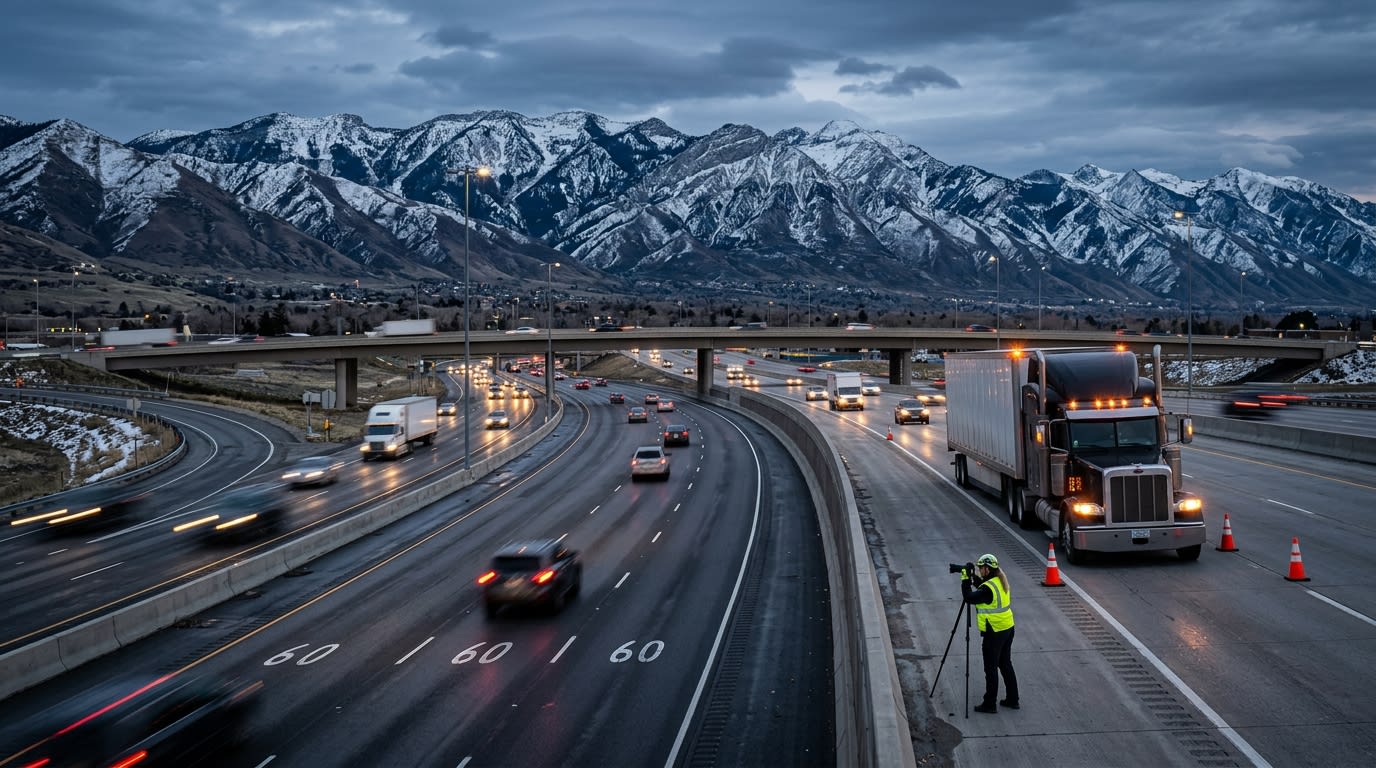

The 360-Degree Recovery Roadmap for Utah Collisions
In the chaotic aftermath of a motor vehicle collision, victims are often bombarded with aggressive insurance adjusters, mounting medical bills, and confusing legal jargon. Securing the right Utah car accident lawyer is not just about filing paperwork; it is about deploying a strategic, data-driven approach to protect your financial future. While many law firms promise vague 'victories,' The Action Firm relies on a 360-Degree Recovery Roadmap. This comprehensive protocol bridges the gap between complex legal statutes and the practical, immediate steps you must take to preserve evidence, establish liability, and pursue the compensation you may be entitled to under Utah law.
Understanding Utah No-Fault Insurance and PIP Thresholds
Utah is one of a minority of states that operates under a 'no-fault' auto insurance system. This framework fundamentally alters how initial medical claims are processed following a crash. Under U.C.A. § 31A-22-307, every licensed driver is required to carry a minimum of $3,000 in Personal Injury Protection (PIP) coverage. This means that regardless of who caused the accident, your own insurance policy is responsible for covering your initial medical expenses, lost wages, and essential services up to that $3,000 threshold.
However, catastrophic injuries or even moderate soft-tissue damage can exhaust this minimum PIP coverage within hours of an emergency room visit. To step outside of the no-fault system and pursue a liability claim against the at-fault driver's insurance, your injuries must meet a specific statutory threshold. This typically requires incurring medical expenses that exceed $3,000 or sustaining permanent disability, permanent impairment, or dismemberment. An experienced attorney can help you meticulously document your medical journey to ensure you meet these thresholds and unlock the full potential of your claim.
The Utah Statute of Limitations Countdown
Time is the single most critical factor in personal injury litigation. The Utah statute of limitations dictates the strict legal deadline by which you must file a lawsuit in civil court. Pursuant to U.C.A. § 78B-2-307, victims generally have exactly four years from the date of the collision to initiate legal proceedings for personal injury claims. If this deadline expires, you permanently forfeit your right to seek compensation, regardless of the severity of your injuries or the clarity of the other driver's fault.
While four years may seem like a generous window, the reality of building a robust legal case requires immediate action. Evidence degrades, witnesses relocate, and traffic camera footage is often deleted within 30 to 90 days. Furthermore, if your claim involves a government entity (such as a collision with a city bus or a crash caused by a defective state road), the Notice of Claim requirements drastically reduce your timeline, often requiring action within just one year. Early intervention by dedicated legal counsel ensures that your rights are preserved and the statutory countdown is managed proactively.

Post-Accident Scene Evidence Checklist
The foundation of a multi-million dollar recovery record is not built in the courtroom; it is built at the scene of the crash. Following a strict Utah auto accident recovery protocol is essential for preserving the integrity of your claim. The following steps outline the critical actions necessary immediately following an impact.
Step 1: Secure the Scene and Report the Collision
Ensure the physical safety of all parties by moving to the shoulder if possible. You are legally required to report any collision involving injury, death, or significant property damage to law enforcement immediately. The resulting police report will serve as an objective baseline for the insurance adjusters.
Step 2: Document the Physical and Digital Evidence
Use your smartphone to capture wide-angle and close-up photographs of vehicle damage, skid marks, road conditions, and traffic signals. Additionally, modern vehicles are equipped with motor vehicle data recorders (often called black boxes) that capture pre-crash speed, braking patterns, and steering angles. Your attorney will send a spoliation letter to prevent the destruction of this vital digital evidence.
Step 3: Seek Immediate Medical Evaluation
Never decline medical attention at the scene. Adrenaline can mask the symptoms of severe trauma, including traumatic brain injuries (TBI) and deep soft-tissue damage. Establishing an immediate medical record links your injuries directly to the collision, neutralizing the defense's argument that your injuries were pre-existing or unrelated.
Calculating Economic and Non-Economic Damages
When pursuing a liability claim, Utah law allows victims to seek two primary categories of compensatory damages: economic and non-economic. Economic damages are objectively verifiable financial losses, including past and future medical bills, lost earning capacity, property damage, and rehabilitation costs. These are calculated using receipts, invoices, and expert economic projections.
Non-economic damages, commonly referred to as 'pain and suffering,' compensate victims for the subjective, invisible toll of an accident. This includes physical agony, emotional distress, loss of enjoyment of life, and loss of consortium. Insurance companies typically calculate these damages using a 'multiplier method,' taking your total economic damages and multiplying them by a factor (usually between 1.5 and 5) based on the severity and permanence of your injuries. In cases of egregious negligence, punitive damages may also be pursued to punish the wrongdoer. Tragically, in fatal collisions, families may seek wrongful death compensation to cover funeral expenses, loss of financial support, and loss of companionship.
Mediation, Arbitration, and Settlement Guarantees
The vast majority of personal injury cases in Utah are resolved before ever reaching a jury trial. The legal process often involves alternative dispute resolution methods such as mediation and arbitration. Mediation is a non-binding process where a neutral third party helps the plaintiff and the insurance defense reach a mutually agreeable settlement. Arbitration is a more formal, binding process where an arbitrator acts as a private judge to decide the outcome.
Navigating these high-stakes negotiations requires aggressive advocacy. Insurance adjusters are trained to minimize payouts using delay tactics and lowball offers. Partnering with a skilled attorney helps you maximize your personal injury claim value. At The Action Firm, we operate on a contingency fee basis, meaning our legal fees are a percentage of your final recovery, and you pay nothing upfront. We strive to achieve net settlement structures that prioritize your financial recovery after medical liens and fees are resolved.

Complex Liability: Distracted Driving and DUI
Not all car accidents are simple negligence. Collisions involving distracted driving (such as texting under U.C.A. § 41-6a-1716) or driving under the influence of alcohol or drugs (DUI) introduce complex liability factors. In these scenarios, the at-fault driver's reckless disregard for public safety can significantly enhance the value of your claim and open the door for punitive damages.
Furthermore, if the at-fault driver is uninsured or underinsured, you may need to rely on your own Uninsured/Underinsured Motorist (UM/UIM) coverage. Navigating UM/UIM claims can be adversarial, as your own insurance company effectively steps into the shoes of the defense. Legal representation is crucial to ensure bad-faith tactics are not used to deny your rightful coverage. Additionally, if the defendant attempts to evade payment after a judgment, your attorney can initiate judgment collection actions, including wage garnishment and property liens.
Frequently Asked Questions
What is the statute of limitations for a car accident in Utah?
Under U.C.A. § 78B-2-307, the statute of limitations for filing a personal injury lawsuit after a car accident in Utah is generally four years from the date of the crash. Failing to file within this strict legal window will permanently bar you from seeking compensation. We highly recommend consulting legal counsel immediately to ensure evidence is preserved and deadlines are met.
How does Utah's no-fault insurance system work?
Utah requires all drivers to carry a minimum of $3,000 in Personal Injury Protection (PIP) to cover initial medical expenses regardless of fault, pursuant to U.C.A. § 31A-22-307. You must exhaust this PIP coverage or sustain severe injuries that meet the statutory threshold before you can file a liability claim against the at-fault driver's insurance.
How are pain and suffering damages calculated in Utah?
Pain and suffering damages in Utah are typically calculated using a multiplier method, where your total economic damages are multiplied by a number between 1.5 and 5 based on injury severity. Insurance companies will try to use the lowest possible multiplier, which is why having an attorney to thoroughly document your daily pain and lifestyle limitations is vital for maximizing your settlement.
Take Action to Protect Your Future
The aftermath of a motor vehicle collision is a critical period that requires decisive, informed action. From understanding PIP thresholds to preserving black box data and beating the statute of limitations, every step you take impacts your final recovery. Do not let insurance companies dictate the value of your health and livelihood. Contact The Action Firm today for a free, no-obligation consultation, and let our dedicated legal team guide you through the 360-Degree Recovery Roadmap.
Disclaimer: The information in this article is for informational purposes only and does not constitute legal advice. Please consult with a qualified attorney for advice on your specific situation.